
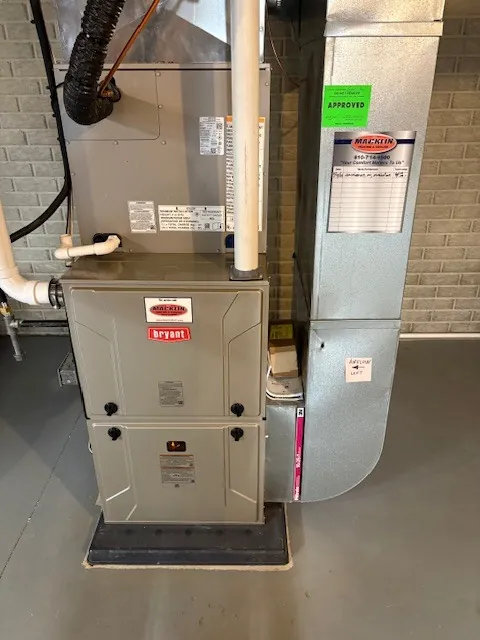
If your home heats with fuel oil, you already know the routine: watching tank levels, scheduling deliveries, and swallowing fuel prices you can’t control. When an oil furnace reaches the end of its life, most homeowners face the same question - replace it with another oil system, or finally make a change?
At Macklin Heating and Cooling, we help homeowners across Genesee County and surrounding communities work through that exact decision. Here’s an honest look at oil furnace replacement costs, your options, and why a growing number of Michigan families are replacing oil furnaces with heat pumps.
When to Replace an Oil Furnace
Oil furnaces are built tough and often run 20 years or more, but age works against them in specific ways. If yours is over 20 years old and showing any of these signs, replacement deserves serious thought:
- Repair bills are stacking up. A repair costing half the value of a new system rarely makes financial sense on an aging unit.
- Fuel consumption is climbing. Worn oil furnaces lose efficiency every year, and you’re paying for every lost percentage point at delivery prices.
- Soot, smell, or smoke. Incomplete combustion signals burner or heat exchanger problems, and raises safety concerns worth taking seriously.
- The heat exchanger is showing its age. Cracks in a heat exchanger can allow carbon monoxide into your home, and on an old unit, replacement usually beats repair.
- You’re tired of the oil routine. Delivery schedules, tank maintenance, and price swings are a lifestyle cost that doesn’t show up on any invoice.
Oil Furnace Replacement Cost
The cost to replace an oil furnace depends on whether you’re doing a straightforward swap or a full conversion. A like-for-like replacement - new oil furnace, same setup - typically costs in the mid-to-high thousands installed, and oil equipment tends to run more than comparable gas equipment. The tank itself may add cost if yours is aging or needs to meet current codes.
A conversion to a different system adds considerations: gas line availability, electrical panel capacity, ductwork condition, and removal of oil equipment and the tank. None of that makes conversion prohibitive, but it means the honest answer on cost comes from an in-home assessment, not a phone quote. We provide clear, itemized estimates so you can compare your real options side by side.
Oil Furnace Replacement Options
Replace With a New Oil Furnace
The path of least resistance. New oil furnaces are cleaner and more efficient than your old one, and everything - the tank, the flue, the fuel setup - stays as-is. The trade-off: you’re committing to fuel oil for another two decades, with all the delivery logistics and price exposure that comes with it.
Convert to Natural Gas
If gas service is available on your street, a gas furnace conversion is a common middle path. Gas is typically cheaper than oil, equipment options are wide, and you lose the tank and delivery routine. The project may involve a gas line connection, flue modifications, and removing the oil system.
Replace the Oil Furnace With a Heat Pump
This is the option more Michigan homeowners are choosing, and for good reason. A cold-climate heat pump heats your home using electricity at two to four times the efficiency of burning fuel. Against oil heat, the operating savings are usually significant, because heat moved is always cheaper than fuel burned. Many homeowners keep the oil furnace as backup for the coldest nights in a hybrid setup, then let the heat pump carry the rest of the year.
The added benefits: one system handles cooling too, no more deliveries or tanks, and federal incentives often apply to qualifying heat pump installations. See how we approach heating systems on our furnace installation and repair page and our mini-split installation page.
Why So Many Michigan Homeowners Are Leaving Oil
The pattern we see is consistent: oil heat made sense when it was the only option. But with modern cold-climate heat pumps performing well through Michigan winters, and gas available in more areas than ever, the reasons to stay on oil have narrowed. Fuel oil is expensive, volatile in price, requires on-site storage of a combustible fuel, and adds maintenance obligations other systems don’t have. When the furnace itself needs replacing anyway, that’s the natural moment to weigh whether another twenty years of oil is what you actually want.
FAQ
How long does an oil furnace last?
Typically 20 years or more - oil furnaces are durable. But durability isn’t the same as efficiency, and an old oil furnace can quietly burn far more fuel than a modern system to produce the same heat.
Is it worth switching from oil to a heat pump?
Often, yes. Heat pumps deliver heat at two to four times the efficiency of fuel-based systems, and against oil’s fuel prices, the savings are usually meaningful - especially with available tax credits and rebates. A hybrid setup that keeps the furnace as backup is a low-risk way to make the switch.
What happens to my oil tank when I convert?
That depends on the tank’s condition and location. Above-ground tanks can often be removed; buried tanks involve environmental considerations and may need professional assessment. We handle the equipment removal side and guide you on what your tank situation requires.
Can a heat pump really heat a whole home in Michigan?
Yes, modern cold-climate models are built for exactly this. Proper sizing matters more than anything, and homes with higher heat loss can pair a heat pump with their existing furnace for the coldest stretches. It’s a proven setup across our service area.
Need help?
An oil furnace replacement is a decision point, not just a repair. Straight replacement keeps things simple but commits you to two more decades of fuel oil. Gas conversion trades the tank for a pipeline. And a heat pump - alone or in a hybrid setup - trades fuel deliveries for efficient electric heating and cooling, often with incentives that soften the upfront cost.
Whichever direction makes sense for your home, Macklin Heating and Cooling will give you honest numbers and clear options. No pressure, no upselling. As a family-owned company serving Genesee County and surrounding communities since 2010, that’s simply how we work.
Call us or Request service online - we’re happy to help.
Need heating or cooling service?
Request service online or call our team for installation, repair, and maintenance.
Request service